Why prime cost is the number that tells you whether a busy week was actually profitable
A packed dining room doesn't mean a profitable week. Prime cost, food plus labor as a share of sales, is the number that tells the real story.
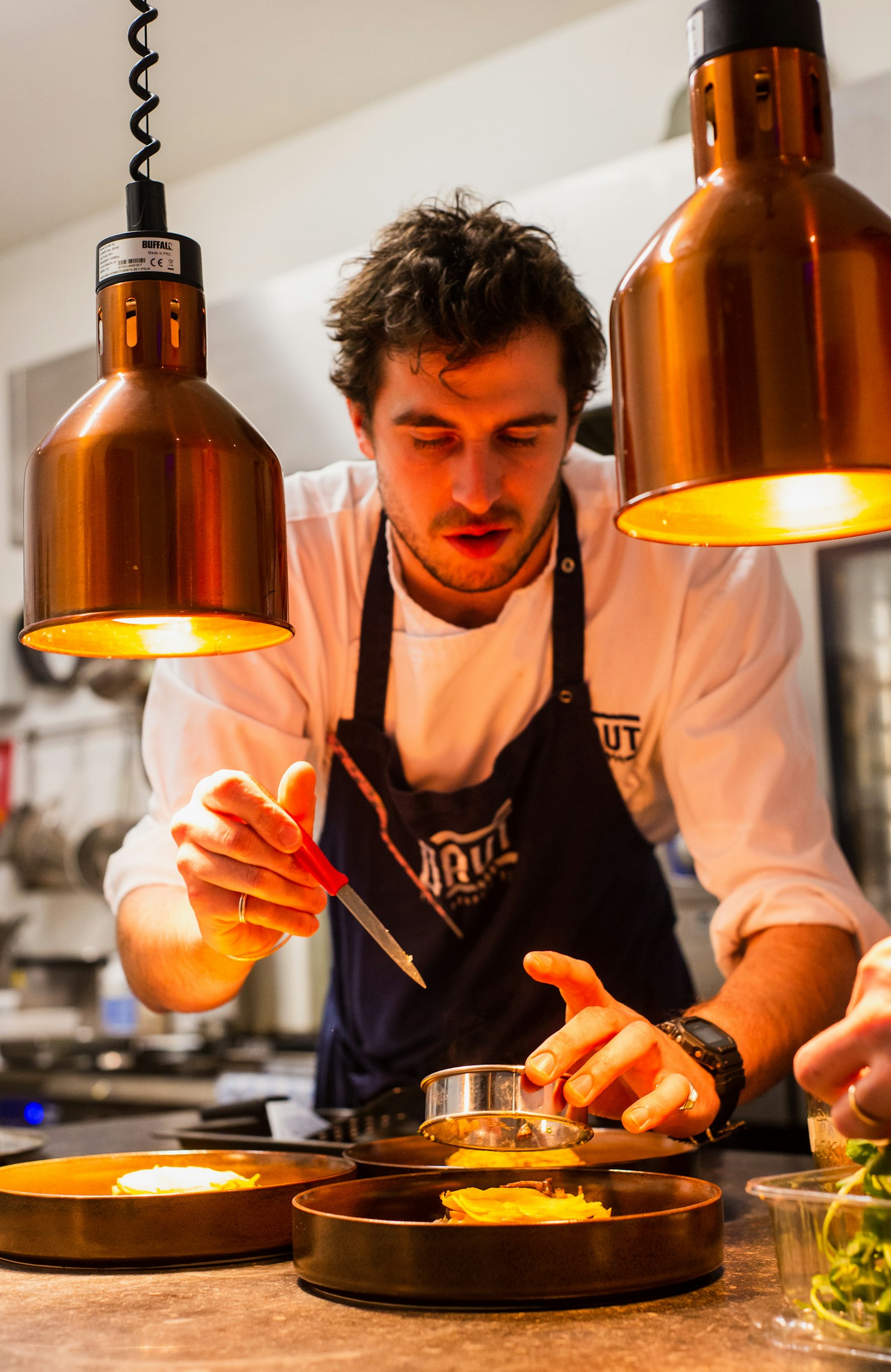
Marco runs a forty-eight-seat Italian place in South Brooklyn. February’s first Saturday: $11,800 in sales, full dining room, kitchen firing hard. He drove home at midnight feeling good about the month.
Two weeks later he sat down with us to review the numbers. Food cost was 31 percent of sales. Labor was 37 percent. Those two numbers added together, what bookkeepers call prime cost, came to 68 percent.
He had 32 cents of every dollar before rent, utilities, and credit card fees. The packed dining room looked different through that lens.
The number most restaurant owners aren’t tracking
Prime cost is food cost plus labor cost, expressed as a percentage of sales. Food cost is what you paid for the ingredients. Labor is hourly wages, salaried managers, and payroll taxes added together. Combined, they are the two biggest costs a restaurant can actually control week to week.
Get prime cost under 65 percent on a full-service model and there is usually money left after the bills. Above 68 percent and the restaurant is running hard, but the owner is often not keeping much of it. Marco had been at 68 percent for about a year. He just hadn’t seen it as one number before.
The good news: prime cost is fixable. It is almost always a handful of specific things that have been allowed to drift.
What pushes prime cost out of range
Food waste and portioning inconsistency. A kitchen that runs six-ounce pasta portions on one ticket and eight ounces on the next will show food cost variance of 30 percent or more on that dish. Over 100 covers a night, the untracked waste adds up fast.
Scheduling creep. Someone calls out and gets replaced with an overtime shift. A slow Tuesday keeps four servers on when two would cover it. Each of those decisions feels small in the moment. By the end of the month, labor hours are 15 percent over what the week actually needed.
Comps and voids that don’t get recorded. A $60 comp is real food cost. If it’s not entered into the point-of-sale system as a comp, it disappears into a “missing” variance at month end. Comps run 2 to 4 percent of sales in most full-service restaurants. That’s not nothing.
Menu prices that haven’t kept up with suppliers. Chicken breast went from $2.80 a pound to $3.90 over eighteen months. If the menu price stayed the same, every chicken dish is now running 20 percent higher food cost than when it was originally priced. Nobody notices because it happens gradually, one invoice at a time.
A real example
One week, two scenarios.
| Line item | Week at 65% prime cost | Week at 72% prime cost |
|---|---|---|
| Sales | $18,000 | $18,000 |
| Food cost (32%) | $5,760 | $5,760 |
| Labor (33% vs. 40%) | $5,940 | $7,200 |
| Prime cost total | $11,700 | $12,960 |
| Left before rent and overhead | $6,300 | $5,040 |
Same dining room. Same menu. Same covers. The only difference is that labor ran 7 points high in the second week, mostly from overtime on a Friday call-out and an overstaffed Tuesday.
Over 52 weeks, that $1,260 weekly difference comes to $65,520.
Why this matters
Prime cost out of range is a slow bleed. It almost never shows up as a single crisis. It shows up as a busy month that still felt tight. It shows up as the owner skipping a draw in March because “March wasn’t a great month,” when March was actually busy.
The problem with watching revenue instead of margin is that it hides what’s really happening. A new weekend special that brings in $3,000 more in sales sounds like a win. If that special runs 80 percent prime cost because of premium protein and extra prep labor, the restaurant got busier and less profitable at the same time.
Without a weekly prime cost number, there is no way to catch that before the month closes.
How clean prime cost tracking actually works
It starts with two weekly inputs: food cost from actual purchases and labor cost from the payroll system. Not estimates. Actual numbers.
For our restaurant clients, we build a prime cost tracker that pulls purchases from invoices (Sysco, US Foods, local suppliers) and labor from whatever payroll processor the client uses. It shows prime cost as a percentage for the current week, the prior four weeks, and the month to date.
When food cost runs high, we compare actual purchases to expected usage based on cover counts. When labor runs high, we look at actual hours punched against the posted schedule. The gap between what was scheduled and what was actually worked is usually where the extra labor is hiding.
The Monday morning conversation the owner has with the kitchen manager is different when there’s a specific number on the table. Not a feeling. A number.
Best practices for restaurant operators
Four habits that move prime cost in the right direction:
- Pull food invoices into the books weekly, not monthly. Entering them immediately shows food cost in real time. Waiting until month end means three weeks of running blind.
- Track comps and voids in the point-of-sale system the same shift they happen. A comp that goes unrecorded inflates revenue and buries what the food actually cost.
- Compare scheduled hours to actual hours punched every Sunday before the new week starts. The gap is where most labor waste lives.
- Price new menu items before they go on the menu. Recipe cost divided by your target food cost percentage sets the minimum price. Anything below that floor loses money from the first ticket.
What to ask your bookkeeper
Three questions worth sending in the next email:
- Are food cost and labor shown as separate line items on my Profit and Loss report, or are they combined into a single cost of goods line?
- Is prime cost being calculated weekly, or only when the monthly books close?
- Are comps, voids, and employee meals tracked separately, or are they absorbed into the food cost number?
If the answer to any of these is “I’m not sure,” the data to build a proper prime cost view is almost certainly already in your point-of-sale and payroll systems. It just hasn’t been connected yet.
Send a screenshot of last month’s Profit and Loss report and we will show you what your prime cost is actually running at and where the number is coming from.
- SALES$18,000 in covers
- FOOD COST$5,760 at 32 percent
- LABOR$5,940 at 33 percent
- LEFT FOR RENT AND PROFIT$6,300, on plan
- SALES$18,000, identical to last week
- FOOD COST$5,760, also at 32 percent
- LABOR$7,200 at 40 percent (Friday call-out, Tuesday overstaff)
- LEFT FOR RENT AND PROFIT$5,040, $1,260 short
Want a second set of eyes on your books?
30 minutes on Zoom. We'll look at your books and tell you what's working and what isn't.
Book a call